Total Pageviews

Sunday, October 20, 2013

             Big asteroid buzzes past Earth and will again in 19 years

 * Breaking News !!!!!!!! *   One of the most dangerous asteroids on record zipped close by Earth last month. It first made headlines when a reporter said that there's a chance it could hit our planet in l9 years. A collision this big is about the same as a couple thousand atomic bombs!! The space agency is 99.998% that when it  circles back around the planet in 2032 it will  simply fly past us again.


The likely hood of it striking Earth currently stands at 1:63,000. Those odds are decreasing fast as scientists find out more about the asteroid. The scientists named the asteroid TV135. TV135 was discovered on October 8 while NASA was closed during the government shutdown.This asteroid has been joining the ranks of the 10000 known near Earth objects that cause no harm.

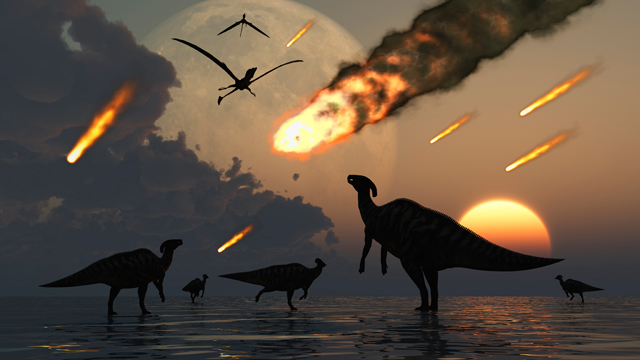
Though it seems Earth is safer for now there is such a thing as a dooomsday asteroid. Scientists say it is likely that the impact of and astreoid over six miles wiped out dinosaurs on Earth 65 millions years ago. NASA says more will come but only every few million years.

My reaction to this article was that I was relieved the asteroid wasn't on a collision course with Earth. I also thought that it was good that the scientists found out more about the solar system around us.Overall I thought the article was interesting.


    news story
asteroid pic


Sunday, October 6, 2013

                  Why do leaves change colors the fall


Did you know  leaves change colors in the fall? You probably said yes but for the wrong reason. Leaves change colors in the fall because night time comes earlier and earlier and  there is not enough sunlight for the plant to use photosynthesis.  Once this happens the green pigment in plants called chlorophyll  is not produced any it stops making the tree green. This is when the interesting part happens. The trees change into orange, red, brown, and yellow colors because of carotenoids and anthocyanins inside the plant.

Carotenoids are brown, orange, and  yellow pigments. Some examples of carotenoids are carrots and  corn. Anthocyanins produce red, pink,blue and purple. Examples of anthocyanins are berries and apples.


Have you ever wondered why some fall leaves are brighter some years and duller other years?  Leaves are brighter when  the autumn days are hotter and the night are cooler because the hot days help them make food and the cool nights keep the energy and food in the leaf making them healthier and brighter.

Chlorophyll in plants absorb and reflect different colors and types of light. Chlorophyll absorbs violet, blue, and red light. It reflects green light in turn making the leaf green in color.

In the winter leaves  fall off and  die. There are some cases however that are different including the pine  and evergreen tree that keep their leaves on year round They do this because they are used to climates where there is limited water and sunlight.


                                                        Links

Sunday, September 29, 2013

                                                                Carnivorous Plants


Heyyyyyy guys it's Thebestscienceblog12 and today I will be talking about carnivorous plants. I know what you are thinking, carnivorous plants are impossible but they exist. Today I will be talking about these mutant plants bwhahahahaahahbwhahahahabwwbhahahah. :)

To be a carnivorous plant you have to attract, catch, and eat insects. Carnivorous plants eat meat because they don't get enough nutrients from the soil for them to survive.  Most carnivorous plants are found in swampy wetland areas. The soil in this environment does not provide enough nutrition especially nitrogen.The lobster pot trap, dewy pine, sundew, Venus flytrap, pitcher plant,  and bladderwort trap are only some of these fantastic plants but these are the ones I will be talking about today.


First I will be talking about one of my more favorite carnivorous plants, the sundew trap plant. :)


There are 100 species of sundew. Half of the sundews are found in Australia, but they are found in every continent around the world except Antarctica. It's just a tad to cold there for them in Antarctica. A sundew catches ants and other bugs in sticky drops on their leaf.   The tips you see wrapped around the bug have sticky ends which attract and catch the  insects.The scientific  name for a sundew is  Drosera .      


Next I will be talking about the commonly known Venus flytrap. The Venus flytrap only grows naturally in North Carolina. This carnivorous plant catches flies and other small insects when they  brush against little hairs on the edges of the leaf. When this happens the fly trap goes CHOMP
trapping the fly inside. One of the cool and unique things about this plant is that you can see it digest its food if you put  it under the light. The digestion process takes 8-10 days.


Next I will be talking about one of the lesser known carnivorous plants, the bladderwort . The bladderwort plant  is found underwater in places all over the world. They catch small insects, usually water fleas by first attracting them with their smell. When the fly gets close enough a trap opens carrying water and the prey inside. Once inside the fly is doomed for all eternity to die in the stomach of a plant. This process all happens in about 1/30 of a second.  


 Now comes the pitcher plant. The pitcher plants are found in Southeast Asia and they eat bugs, frogs, and once in a while birds and rodents. These plants have thin tubes to catch prey and some have lids to ensure success in catching an animal. The prey slides down the slippery inside of the tube  and falls into pond of digestive juice. Yummmy!!!


Lastly comes another one of the least know carnivorous plants. The dewy pine plant is basically a wanna- be  sundew plant. The dewy pine plant first attracts insects with sweet honey smell then  catches any insects that lands on it's leaves. It acts as a living fly paper.


Carnivorous plants like all other plants start out as seeds. They then germinate and grow and sprout flowers. The flowers then spread their seeds and the process starts all over. This is how carnivorous plants reproduce.


                                                                          Fast Facts

  • There are over 600 different types of meat-eating plants

  • Pitcher Plants are sometimes called monkey cups

  • Bladderworts have about 220 different species

  • The scientific name for a Venus fly trap is Dionaea Muscipula


                                                                    Links


http://www.factmonster.com/ipka/A0932475.html

http://www.gardenguides.com/86984-carnivorous-plants-reproduce.html

http://www.sarracenia.com/faq/faq5280.html


Monday, September 23, 2013

                                          Photosynthesis

Heyyyyy guys its Thebestscienceblog12 and today I will be talking about plants and photosynthesis. Photosynthesis is the process of getting energy from the sun and making them into nutrients for food. Only plants can do this so don't try  to summon a big mac at home :).

All livings things including you and me need food and nourishment to grow. Plants make their food by using a process called photosynthesis.  Photosynthesis is the process of getting energy from the sun and making them into nutrients for food. The sun is a major part of this process. Its nutrients are turned into glucose, a type of sugar.


Glucose is the main source of nutrients for plants. It helps fuel the cell for function and growth. Glucose is basically the food your parents make for you at home.

Roots are used to take water from the soil for the benefit of the plant. Water travels from the roots to the plants' leaves through a transport tissue called Xylem, wood in trees. Leaves absorb carbon dioxide from the air through openings called stomata.


Water and carbon dioxide spread through the leaves into cells called the palisade and spongy cell.These cells contain structures called chloroplasts, which are filled with a green pigment called chlorophyll. Chlorophyll is what makes plants green.


In photosynthesis, chlorophyll traps energy from sunlight, storing it as chemical energy. This process splits water molecules into hydrogen and oxygen atoms.The chemical energy is used to create glucose from the hydrogen and carbon dioxide. The glucose dissolves into extra water molecules and gives the plant plenty of food for growth.

The leaves release oxygen as a waste product. That's one reason plants are important to us. They absorb carbon dioxide and leave us with oxygen. We inhale the oxygen and exhale carbon dioxide into the air.


                                                                           Fast Facts
  • Photosynthesis is affected by temperature, light intensity, light wavelength and carbon dioxide level.
  •   30 percent of the world's oxygen comes from rainforests.
  • Photosythesis is the reason conifers and other pine trees grow in a cone shape .This shape allows more needles to be exsposed to the sun, which enables the tree to grow taller.
  • Photosythesis is the single most important chemical process in the world. 


                                                                               Links


                                     Thanks For Reading  !!!!  
 

Thursday, September 5, 2013

                                      The Six Kingdoms


Hi guys its great to be back writing my third blog post. Today I will be talking about the six kingdoms of classification in the world. Basically, to put it in simple terms, it is the classification of all living things. The six different kingdoms are the bacteria, archea,  protist,  fungi, animal, and plant kingdom.

Aristotle,one of the early Greek philosophers, tried to organize living things. He split life into two main categories, animals and plants.  It was later divided into things like physical traits and habitats. This classification held up for more than 2,000 years. Later in about the 20th century they began to group organisms on their phylogeny, how organisms are related through evolution.  Using phylogeny as a guide scientists divided life into six kingdoms.


The first kingdom I will be talking about is the Animal kingdom. The Animal kingdom is the kingdom humans are classified in. The organisms classified under animal kingdom are multicellular and have a nucleus controlling their cells. Animals also have to move around or hunt for their food to survive. The one exception is the sea coral. The scientific word for it would be sessile which means it is permanently attached or not freely moving.


Second, is the plant kingdom. Plants and fungi used to be classified in the same kingdom until scientists found out that plants make  there own food and fungi suck up nutrients. The plants make their own food through photosynthesis. Photosynthesis is the conversion of sunlight and carbon dioxide into food. Plant cells have rigid walls made out of a material called cellulose.


Third, is the fungi kingdom. The fungi kingdom is similar to the plant kingdom but is different in the way they get food. Fungi suck up nutrients from decaying plants and organisms. They suck up the nutrients with tiny threads called hyphae that attaches to the dead organisms.  The hyphae resemble plant roots.


Fourth, I will be talking about the protist kingdom. The protists are a special kingdom because the protists can use sunlight to get food like plants and some can capture food like animals or do both. Most protists are single celled organisms. The nucleus controls the cell in all protists.


Now for the archea kingdom. The archea kingdom has some of the oldest life forms on Earth but, they weren't found until the 1970's. They can be found abundantly around the earth but many like to live in extreme conditions. These conditions can vary from deep water trenches to scalding hot springs. Archea are also prokaryotic which means that they have no nucleus.


Lastly, I will be talking about the bacteria kingdom. Bacteria can come in many shapes and sizes but some of the most common are spheres, rods, and spirals. Surprisingly, most bacteria are not pathogens, the kind that make you sick. You can find bacteria almost everywhere. Bacteria can be found in the air, on foods, in water, and in other living organisms. Just like archea bacteria are prokaryotic.


Fast Facts

  • The animal kingdom is the largest kingdom with over 1 million known species.
  •  One of the first places Archeabacteria was found is Yellowstone National Park in the United states.
  •  Animals are the most complex organisms on earth
  •    The scientific names for animals and plants are Animalia and Plantae.                                                        

Links


                                        http://www.ric.edu/faculty/ptiskus/six_kingdoms/
  
                              http://www.factmonster.com/science/biology/six-kingdoms.html


Thanks For Reading !!!!!!


Thursday, August 29, 2013

                                      Cells


Cells are the building blocks of the body .Your body is made up of  trillions of cells. Cells die each day but many of them are born again.


The first part of your cell you see is your cell membrane. The cell membrane controlls what goes in and out of the cell. It keeps out harmful things like chemicals and keeps all your organelle inside.

Inside your cell membrane  is the cytoplasm. The cytoplasm is a mixture of chemicals and water . Cytoplasm holds nutrients and flows around the cell carrying organelle.

The boss of the cell is the Nucleus. It controlls the rest of the cell with instructions from the D.N.A. It hands out orders to the rest of the organelle that are under its command.


The thing that keeps your cell running is the Mitochondria. The Mitochondria is the power house of the cell and it breaks down food and lets out energy. 

One of the most important parts of your cell is your Ribosomes. The ribosomes make protein which cells need for everything they do. The ribosomes work together with the Golgi
bodies  because the ribosomes make the protein while the golgi bodies send them out to other parts of the body.

The Vacouoles and Vesicles are used to store waste, water, and other substances until they are needed.

                                                                                  Lastly there is your E.R. The smooth E.R makes Large Molecules then stores them. The rough E.R is lined with Ribosomes  which i talked about earlier in the blog.

Basically your  body is made up of tiny little factories that make  your body  whole factory.

                      Thanks For Reading!!!!!!


Thursday, August 22, 2013

                                           The Scientific Method


   Today I will be talking about the scientific method. This is my first ever blog. The scientific method is a series of questions scientists ask to figure out a problem. There are several versions of the scientific method but they all are made to answer questions about the world around us.

  The first step in the scientific method is to Identify the problem. The problem could come from an assorment of things about everday life. An example could be at how to get a stain out your carpet the fastest and easiest way.

   Second you form a hypothesis. A hypothesis is a predication on what you think will happen. The hypothesis for our problem would be " I think that a towel with soap and water will clean and remove the stain the best.".

   Next is my favorite step in the scientific method, create an experiment! Based on your hypothesis you form and experiment to match it. For example you would use the towel with soap and water and trie to clean the stain. After that you analyze your data to see how well the stain was cleaned. Then you take a variable and do the experiment again.